

To track branded search demand from AI answers, log three weekly series side by side: how often AI engines name your brand for a fixed prompt set, your branded impressions and clicks in Search Console, and direct sessions landing on deep pages. Then test whether mentions move first. No tool gives a one-click answer, because AI engines do not report who saw a mention.
Key takeaways
- Fix a prompt set and record your mention rate weekly. Without a stable mention series, there is nothing to compare branded search against.
- Use the Search Console branded queries filter for the branded series, and keep non-branded and competitor series as controls.
- Test direction, not just correlation: check whether mentions lead branded search by 0 to 4 weeks, and whether branded search leads mentions instead.
- Check direct traffic by landing page. Direct sessions on deep pages that AI engines cite are a sign of lost referrer data.
- Add one self-reported question to your forms: "Did an AI assistant mention us?" It catches what analytics cannot.
- Treat the result as a directional signal. Google's own AI Overviews are now on most branded results, so they confound the test.
How do I know if AI answers are driving my branded search?
You cannot read it from one report, so you build a case from several. An AI answer that names your brand rarely produces a click. It produces a memory, and the person searches your name later, on another device or after a conversation. That lag, and the missing click, is why the demand looks untracked.
Three facts shape the method:
- AI features in Google are not separated in your normal data. Google Search Central, as checked November 2026, says AI Overviews and AI Mode traffic is reported in the Performance report within the Web search type.
- ChatGPT clicks can arrive with no source. Sitebrunch, October 2026, reports that many ChatGPT clicks since 9 October 2026 carried no referrer or utm_source tag and landed in Direct, and that OpenAI fixed this from 15 October.
- Google's AI Overviews are already on most branded results. Search Engine Journal, October 2026, reports Ahrefs data in which 61.3% of branded keywords triggered AI Overviews in July and 73.3% in September.
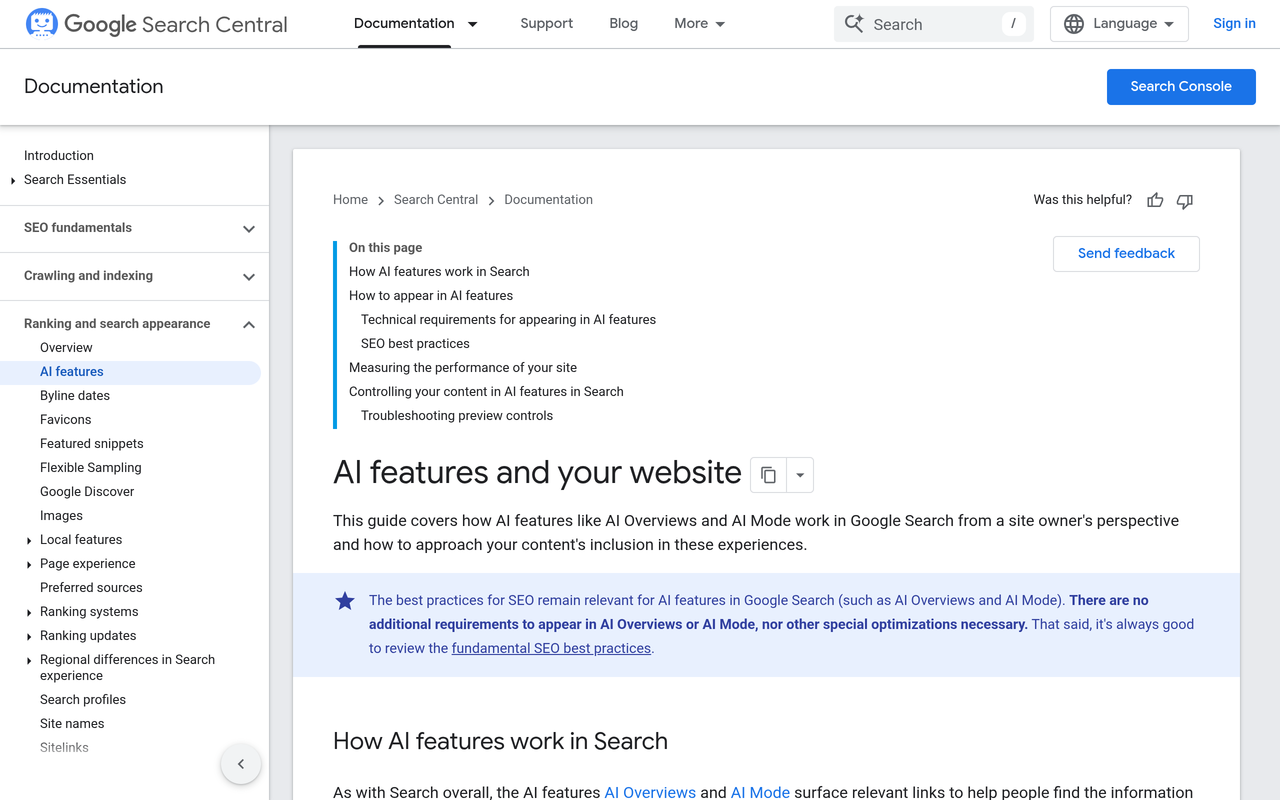
The Google page states that AI feature traffic is "reported on in the Performance report, within the 'Web' search type". So Search Console will never tell you which branded impressions followed an AI mention. You have to supply the mention side yourself.
What data do you need before you start?
Four series, all weekly, for at least 12 weeks. Weekly smooths the day-to-day noise in AI answers, which the AI citation stability guide covers in more detail.
| Series | Source | What it measures | Main limit |
|---|---|---|---|
| AI mention rate | Prompt tracking across engines | Share of tracked prompts where your brand is named | Only as good as the prompt set |
| Branded impressions and clicks | Search Console, branded queries filter | Demand expressed as searches for your name | Filter only for eligible sites with enough query volume |
| Non-branded impressions | Search Console, same dates | Control for seasonality and Google changes | Also affected by AI Overviews |
| Direct sessions by landing page | GA4 or server logs | Visits with no recorded source | Includes bookmarks, email and dark social |
Google announced the branded queries filter in November 2025 and, per Search Engine Journal, October 2026, it opened to all eligible sites in March. If your property does not show it, use a regular expression on your brand name and its misspellings in the Query filter instead. Keep the same expression for the whole test.
How to build the mention series
Choose 20 to 50 prompts your buyers ask, split across category, comparison and problem questions. The guide to choosing prompts to track explains how, and the free AI Prompt Finder gives you candidates by intent. Then freeze the list. Changing prompts mid-test breaks the series.
Record one number per week per engine: prompts where the brand is named divided by prompts run. Keep engines separate. They disagree often, as why AI engines disagree shows, and a blended figure can hide the engine that matters.
Noma by Nurdd is an AEO (answer engine optimisation) and AI visibility platform. It asks 13 AI engines, including ChatGPT, Gemini, Perplexity and Claude, the questions your buyers ask, every day, and shows where your brand is named, where competitors are named instead, and which pages the answers draw on. That daily mention record is the series this test needs. See it on your own brand: book a demo or start the 3-day free trial. A card is taken at signup so billing can start on day 3; cancel before then and nothing is charged.
How can I test whether AI mentions come before branded searches?
Use a lead-lag test. It is simple enough for a spreadsheet and answers the one question competitors' guides skip: which way the arrow points.
- Build the table. One row per week: mention rate, branded impressions, non-branded impressions, direct sessions on deep pages.
- Convert to change. Calculate the week-on-week percentage change for each column. Levels trend; changes are easier to compare.
- Run forward lags. Correlate the change in mention rate in week t with the change in branded impressions in weeks t, t+1, t+2, t+3 and t+4 (the Excel CORREL function works).
- Run the reverse. Correlate branded impressions in week t with mention rate in weeks t+1 to t+4. Brand popularity also raises AI mentions, so both directions can be real.
- Add the controls. Repeat step 3 with non-branded impressions. If non-branded moves with the same lag, a Google-wide or seasonal factor explains it.
- Check an event. Find a week where mentions jumped, for example after a review-site listing or a press piece, and see whether branded impressions rose in the weeks after, but not before.
The lag you are looking for is not universal. Treat the strongest lag in your own data as a hypothesis and confirm it on the next 8 weeks of data rather than trusting one fit.
How to read the result
| Pattern in your data | Likely meaning | What to do |
|---|---|---|
| Mentions lead branded impressions; non-branded flat | AI exposure plausibly adds brand demand | Keep investing in the sources the answers draw on; re-test in 8 weeks |
| Branded impressions lead mentions | Existing demand is feeding AI answers, not the reverse | Treat mentions as an outcome; work on third-party sources |
| Both rise together, no lead | A shared cause such as a campaign or press | Use event windows, not correlation |
| Non-branded moves the same way | Google-wide or seasonal effect | Discount the result |
| No relationship over 12 weeks | No detectable effect at your volume, or a noisy prompt set | Widen prompts; check volume is large enough |
Direction matters because the research points both ways. In an Ahrefs study of 75,000 brands, as reported by BrandCited in 2026, branded web mentions correlated with AI visibility at 0.664, against 0.218 for backlinks. That tells you well-known brands show up in AI answers. It does not tell you AI answers made them well known.
How do direct-traffic checks fit in?
Direct traffic is where AI-driven visits hide. The visit arrives without a referrer, so GA4 files it as Direct. Sitebrunch, October 2026, cites Adobe's Cedric Huesler, who analysed about 500 pages: ChatGPT visits fell by about 31,000 a day while direct visits rose by about 26,000 a day during the outage.
That is one analysis of one bug, not a rate you can apply to your site. But it gives you a test you can run:
- In GA4, open the landing-page report and filter to sessions where the source is Direct.
- Separate homepage landings from deep-page landings. Bookmarks and typed URLs mostly land on the homepage. People do not type a deep URL from memory.
- Compare deep-page direct landings with the pages your tracked AI answers cite. Noma shows which pages the answers draw on.
- Plot the deep-page direct series weekly next to your mention rate.
- Filter sessions whose source contains chatgpt.com, perplexity or gemini, and check the dates of any gaps against the October 2026 outage.
A rise in deep-page direct landings that follows a rise in mentions is a second, independent signal alongside branded impressions. For the referral side of this, the guides to Gemini UTM parameters and GEO measurement beyond referrals go further.
How can I measure the effect of ChatGPT mentions on brand demand?
ChatGPT is a practical engine to isolate first, because it sends referrer data when tagging works. Run the whole test for it alone as well as across engines. Use only your ChatGPT mention rate, then watch three things:
- Branded impressions in Search Console, lagged as above.
- Sessions with chatgpt.com as source, which only count the clickers.
- Deep-page direct sessions, which catch clickers with no source.
If branded impressions rise after ChatGPT mentions rise but Gemini and Perplexity mentions stay flat, the engine-specific test is stronger evidence than the blended one, because the other engines act as controls. If you want to learn how to get started on the mention side, see how to track brand mentions in ChatGPT.
What else can confuse the result?
Four confounders cause most false conclusions.
- Google's AI Overviews on branded queries. Search Engine Journal, October 2026, reports that Ahrefs saw AI Overviews on 82.91% of U.S. desktop results for branded keywords on 29 September, and notes that the vendors do not explain how they classify branded keywords. Branded impressions may move because of Google's own layout.
- Campaigns and PR. They raise both mentions and branded search. Mark every launch, press hit and paid push on your weekly table.
- AI Mode query counting. Check whether follow-up questions in AI Mode inflate impressions for your site. Google's documentation does not say this, so treat it as something to test against your non-branded control rather than a known effect.
- Small numbers. A brand with a few hundred branded impressions a week will not give a clean lag. Report a trend over longer windows or skip the statistics and use event windows.
What should I add that analytics cannot see?
Ask people. Add one required question to demo, trial and checkout forms: "How did you first hear about us?" with options that include "An AI assistant (ChatGPT, Gemini, Perplexity, Claude)" and "Google search". Self-reported answers are biased, but they catch the visits that no referrer ever recorded, and they tell you which engine the buyer remembers.
Keep the question free text for one extra field. Over a quarter, the wording buyers use often reveals the prompt they asked, which is a source for your next prompt list. Use it alongside the AI search attribution guide.
Which free checks can I run today?
Run these in order, in about an hour:
- Open Search Console, Performance, and apply the branded filter. Export 16 weeks of weekly impressions.
- Run the free brand audit to see whether ChatGPT, Perplexity and Gemini name you for 10 buyer questions. That is your baseline mention reading.
- Run the free AI SEO Checker on the page you most want AI engines to quote. It shows whether engines can read and quote it, and the top fixes.
- In GA4, build the Direct by landing page report and flag deep pages.
- Create the weekly table and write down every campaign date.
For a competitor-relative view, the guide to measuring AI share of voice shows how to put your mention rate next to rivals, which doubles as a control series.
What mistakes make the test misleading?
- Changing the prompt list during the test.
- Using one daily snapshot instead of a weekly rate.
- Blending all engines into one number.
- Comparing levels instead of changes.
- Ignoring the October 2026 ChatGPT tagging gap when reading direct traffic.
- Claiming causation from a correlation, in a board report or otherwise.
When you report the result, say "consistent with" or "not detected". A finance reader will trust a stated limit more than a confident chart.
How we researched this
We reviewed Google Search Central documentation on AI features and Search Console reporting, Search Engine Journal's reporting on Ahrefs branded-keyword data and the branded queries filter, a report on the October 2026 ChatGPT referrer issue, a summary of the Ahrefs 75,000-brand study, and two articles on branded search measurement for gaps. Facts, figures and dates were checked on 2026-11-16. We have not run this test on customer data, and the lead-lag method above is a practitioner approach, not a published standard.
What should you do next?
Start the weekly table this week, freeze your prompt set and mark your campaign dates. In 12 weeks you will have enough to say whether mentions lead branded demand for your brand. To get the mention series without logging answers by hand, book a Noma demo or start the 3-day free trial. Plans and prices are on the pricing page.
See what AI engines say about your brand
Free · no account · or start a 3-day trial
Questions people ask
How do I know if AI answers are driving my branded search?
Track your AI mention rate weekly for a fixed prompt set, then compare it with branded impressions in Search Console over at least 12 weeks. If mentions rise first, non-branded impressions stay flat and deep-page direct visits also rise, AI exposure is a plausible driver. It is a signal, not proof.
How can I measure the effect of ChatGPT mentions on brand demand?
Use your ChatGPT-only mention rate and lag it against branded impressions by 0 to 4 weeks. Add sessions with chatgpt.com as source and deep-page direct sessions to catch visits with no referrer. Use Gemini and Perplexity mention rates as controls.
Does Search Console show branded searches that came from AI answers?
No. Google's documentation says AI Overviews and AI Mode traffic is reported within the Web search type of the Performance report, with no separate marker on each query. The branded queries filter separates branded from non-branded searches, but not what prompted them.
Why does ChatGPT traffic show up as direct in GA4?
Many ChatGPT clicks arrive without a referrer, and GA4 files sourceless visits as Direct. Sitebrunch reported that a missing utm_source tag from 9 October 2026 made this worse, and that OpenAI fixed it from 15 October. Visits from the outage stay in Direct.
How long should I track before drawing a conclusion?
At least 12 weekly data points, ideally 16, with a frozen prompt set. Shorter windows are too noisy because AI answers vary from day to day. Re-test on the next 8 weeks before treating a lag as real.
Can I show AI mentions cause branded search growth?
Not from observational data alone. Brand popularity also increases AI mentions, so the link can run both ways. A lead-lag test, control series and event windows can make a causal link more or less plausible, which is the honest wording for a report.