

Schema markup is structured data that states the facts of a page in a form machines can parse, and you can generate schema markup online in minutes. It makes your entity facts clearer, but no study shows it earns citations in ChatGPT or Google's AI features. Add it for accuracy and rich results, then test it.
Key takeaways
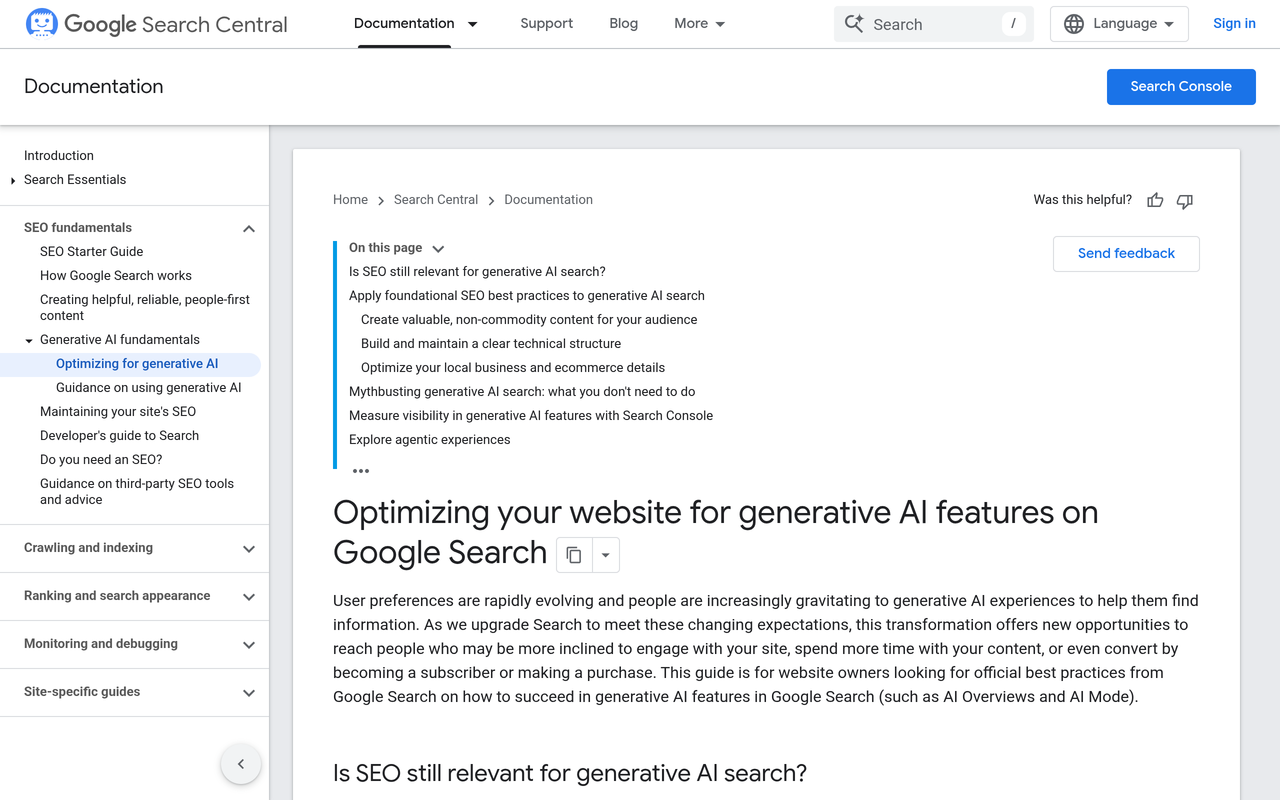
- Google says structured data is not required for generative AI search and that no special schema.org markup exists for it. Keep it for rich results and clarity.
- Ahrefs matched 1,885 pages that added JSON-LD against control pages and found no clear citation uplift in AI Overviews, AI Mode or ChatGPT.
- Start with Organization, Article and BreadcrumbList, then add Product, SoftwareApplication or LocalBusiness only where the page is about that thing.
- Every property must match text a reader can see on the page. Markup that contradicts the page breaks Google's guidelines and teaches machines the wrong facts.
- Validate twice (Rich Results Test and Schema Markup Validator), then measure with a fixed prompt set, not with one-off checks.
Does schema markup help get cited in ChatGPT?
There is no published evidence that it does. A public matched test is Ahrefs' May 2026 study, reported by Search Engine Journal, May 2026. Ahrefs tracked 1,885 pages that added JSON-LD and matched them against control pages from other domains that never added it. Citation changes were measured 30 days before and after.
| Engine | Change vs controls | Reading |
|---|---|---|
| Google AI Overviews | -4.6% | Small decline relative to controls |
| Google AI Mode | +2.4% | Too small to separate from random variation |
| ChatGPT | +2.2% | Too small to separate from random variation |
The same report analysed 6 million URLs and found that AI-cited pages were roughly three times more likely to include JSON-LD. That gap is correlation. Sites that invest in schema also tend to invest in content and earn links, which is why the matched test matters. The original write-up is on Ahrefs, May 2026.
A second, smaller test is inconclusive. OtterlyAI, 2026 implemented five schema types on its own site and tracked 319 prompts over three months, from December 2025 to March 2026. Its own single-site data shows mixed results by platform: ChatGPT citations -71%, Gemini -35%, Copilot -64%, Perplexity 0%, AI Mode +42% and AI Overviews +611%. With one SaaS site, no controls of the kind Ahrefs used and results pointing in opposite directions, it cannot show that schema raises or lowers citations.
"Structured data isn't required for generative AI search, and there's no special schema.org markup you need to add." (Google Search Central, November 2026)
Microsoft is the one platform with a more positive public statement. Bing's Fabrice Canel said at SMX Munich in March 2025 that schema markup helps Microsoft's LLMs understand content, as reported by Search Engine Roundtable, March 2025. "Understand" is not "cite more often", and Noma by Nurdd does not track Microsoft Copilot, so this is a point about how Bing reads pages, not a measured citation effect.
What should schema do for you, then?
Schema is a labelling job. It tells a parser that this string is the company name, this URL is its logo, this date is the last update and this person wrote the page. That removes guesswork where the page text is ambiguous. It does not add authority, and it does not replace the sources engines read about you elsewhere.
Three jobs justify the effort:
- Entity clarity. One consistent Organization record helps search systems tie your name, domain and profiles together, which matters if another company shares your name.
- Rich result eligibility. Google still uses structured data for search features, and its guide says to keep using it for that.
- Machine-readable facts. Dates, authors, prices and availability become explicit, so a crawler does not infer them from layout.
If your real problem is that AI engines never name you, schema is rarely the cause. Check how AI engines decide which sources to cite before spending a sprint on markup.
What schema should I add to be understood by AI search?
Add the types that describe what the page actually is. The table below is a working decision frame, not a ranking of effectiveness: none of these has a proven citation effect.
| Schema type | Put it on | Facts it states | Evidence level |
|---|---|---|---|
| Organization | Home page or About page | Name, URL, logo, description, sameAs profile links, contact | Documented by Google for brand details; no citation effect shown |
| Article or BlogPosting | Every post and guide | Headline, author, published and modified dates, publisher | Clear dates and authors; no citation effect shown |
| Person | Author pages | Name, role, profile links | Supports author identity; no citation effect shown |
| BreadcrumbList | Any page with a trail | Where the page sits in the site | Standard Google feature |
| Product and Offer | Product pages | Price, currency, availability, reviews | Used for Google product features; facts must match the page |
| SoftwareApplication | Software product pages | Name, category, operating system, offers | Included in OtterlyAI's single-site test, which gave mixed results |
| LocalBusiness | Location pages | Address, hours, phone, geo | Useful where listings must agree; see local guidance |
| FAQPage | Pages with visible Q&A | Question and answer pairs | Check Google's current eligibility rules; no citation effect shown |
Start with Organization
Google's own Organization documentation, November 2026 shows the core properties: url, name, logo, description, sameAs, plus contact and address details. Use the same legal name, wording and profile links that appear on your About page, LinkedIn page and review-site listings. Inconsistency across those places is a bigger entity problem than missing markup.
Then Article, with real authors and dates
Mark up the headline, author, datePublished and dateModified. Only change dateModified when the content changes. A freshly stamped date on an unchanged page is the kind of misleading markup Google's policies warn against.
Add commerce and local types only where they apply
Product, Offer and LocalBusiness carry numbers that change: price, stock, hours. Generate them from the same database that feeds the visible page, so the two cannot drift apart.
What has no proven effect on AI citations?
Treat these as optional until you have tested them on your own pages:
- Schema added "for AI" in bulk. Google says there is no special markup for its AI features.
- Stacking every available type on a page. More types do not create more facts. Markup must describe visible content.
- FAQ markup as a citation trick. The Ahrefs test shows no clear uplift, and OtterlyAI's mixed single-site results, which included FAQ schema among five types, do not support it either.
- Schema as a substitute for third-party coverage. Engines draw on pages about you across the web. See how to get cited more often by AI engines for the work that moves citations.
Honest summary for a stakeholder: schema is cheap insurance for clarity and rich results, and an unproven lever for AI citations. Budget it as hygiene, not as a growth channel.
How do I create schema markup online?
Use a generator to produce JSON-LD, then paste it into the page head. The free Noma schema markup generator and validator builds Organization, Article, FAQ, Product and LocalBusiness JSON-LD prefilled from your site, and checks markup you already have.
- Pick the type from the table above. One primary type per page, plus BreadcrumbList.
- Enter the facts as they appear on the page. Copy the name, date and author from the visible text.
- Generate JSON-LD. Google lists JSON-LD as recommended among its three supported formats.
- Place it in a script tag of type application/ld+json. A CMS plugin, tag manager or template works. Make sure it renders in the delivered HTML where possible.
- Publish, then validate using the steps below.
How do I validate schema markup?
Google's structured data testing page, November 2026 recommends two tools: the Rich Results Test to see which Google rich results a page can generate, and the Schema Markup Validator for generic schema.org checks without Google-specific rules. Run both, because they answer different questions.
| Check | Tool | What a pass means |
|---|---|---|
| Syntax and schema.org validity | Schema Markup Validator | Parses without errors, types and properties exist |
| Google rich result eligibility | Rich Results Test | Required properties present for supported features |
| Markup matches visible page | Manual read-through | Every value appears in the page text |
| Crawlers can reach it | Free AI Crawler Checker | GPTBot, OAI-SearchBot, ClaudeBot, PerplexityBot and Google AI are not blocked |
| Page readable overall | Free AI SEO Checker | 30+ checks pass, including structured data |
Passing validation proves syntax, not value. Google's structured data guidelines, November 2026 also say not to mark up content that is not visible to readers, and that quality violations are not easily testable by tools. The manual row is not optional.
Three common failures
- Markup says one thing, page says another. A price in JSON-LD that differs from the page price.
- Blocked pages. Google's guidelines say not to block structured data pages with robots.txt or noindex.
- Client-side injection that never renders for bots. Check the delivered source as well as the rendered DOM.
How do I test whether schema changed anything for my brand?
Run your own small version of the Ahrefs design. You do not need 1,885 pages, only discipline.
- Pick 10 pages that will get schema and 10 comparable pages that will not. Match on topic and current traffic.
- Write 20 to 30 unbranded buyer prompts that those pages should answer. The free AI Prompt Finder suggests questions buyers ask about a category.
- Record a baseline for four weeks: how often each engine names you and cites each page, with each prompt repeated several times, since answers vary. AI citation stability explains why.
- Ship the schema on the treatment pages only, change nothing else on those pages.
- Measure four more weeks and compare the change on treatment pages with the change on controls.
If the difference is within the run-to-run noise, call it no effect. If you cannot hold other edits still, say so in the report. This is the same logic as choosing a prompt set that stays comparable.
Where Noma fits
Noma by Nurdd is an AEO and AI visibility platform that asks 13 AI engines, including ChatGPT, Gemini, Perplexity and Claude, your buyers' questions every day. It shows where your brand is named, which competitors are named instead and which pages the answers draw on, so you can compare schema-edited pages against untouched ones on a fixed prompt set. Noma also audits structured data as part of its AEO readiness checks.
See it on your own brand: book a demo or start the 3-day free trial. A card is taken at signup so billing can start on day 3; cancel before then and nothing is charged.
A short checklist to ship this week
- Organization JSON-LD on the home page with the exact name, logo and sameAs links used elsewhere.
- Article or BlogPosting on every post, with a named author and honest dates.
- BreadcrumbList sitewide.
- Product or LocalBusiness only where the page sells or locates something.
- Both validators run, and values checked against the visible page.
- AI crawlers allowed in robots.txt and your CDN.
- A dated baseline of AI answers before and after, so you can see whether anything moved.
How we researched this
We reviewed Google Search Central documentation on generative AI features, structured data guidelines, Organization markup and testing tools, plus a matched study from Ahrefs as reported by Search Engine Journal, a single-site experiment from OtterlyAI, and a Microsoft statement reported by Search Engine Roundtable. We also read current competing guides on schema for AI search to find what they omit. Facts, figures and tool descriptions were checked on 2026-11-04. We ran no schema experiment of our own for this article.
What to do next
Generate and validate your Organization and Article markup with the free schema generator, then measure whether AI answers change. To track that across 13 AI engines on your own prompts, book a demo or start the free trial.
See what AI engines say about your brand
Free · no account · or start a 3-day trial
Questions people ask
Does schema markup help get cited in ChatGPT?
No public evidence says it does. Ahrefs matched 1,885 pages that added JSON-LD against control pages and found a +2.2% ChatGPT change that was too small to separate from random variation. Schema still helps machines read facts such as names, dates and prices, so add it for clarity and test the effect yourself.
What schema should I add to be understood by AI search?
Start with Organization on your home or About page, Article or BlogPosting on every post, and BreadcrumbList. Add Product, SoftwareApplication or LocalBusiness only where the page is about that thing. Every value must match text visible on the page.
Does Google need special schema for AI Overviews?
No. Google's guide to generative AI features says structured data is not required and no special schema.org markup is needed. It still recommends structured data as part of overall SEO because it supports rich result eligibility.
How do I validate schema markup?
Run the Rich Results Test to see which Google rich results a page can produce, then the Schema Markup Validator for generic schema.org checks. Then read the markup against the visible page, because tools cannot catch every quality-guideline violation.
Is JSON-LD better than Microdata?
Google lists JSON-LD as its recommended format, with Microdata and RDFa also supported. JSON-LD sits in one script block, so it is easier to generate, review and keep separate from page layout.
Can I generate schema markup online for free?
Yes. Noma's free schema markup generator and validator builds JSON-LD for Organization, Article, FAQ, Product, LocalBusiness and more, prefilled from your site, and validates existing markup. Paste the output into the page head, then check it with Google's validators.