
Google did not ban top 10 listicles for AI search. Its marketing account told CMOs to stop publishing generic "Top 10" tips posts and lead with first-hand expertise. A "best X tools" page can stay citable if every entry carries evidence only you hold: your own tests, numbers, screenshots and a named author.
Key takeaways
- The target is commodity content. Google's example is a generic "Top 10 Things to Consider" post, not every ranked list.
- Listicles still earn a large share of AI citations, especially on commercial queries, so deleting them is the wrong reaction.
- Self-ranked "best" lists can be cited and still lose the recommendation to a competitor. Cited is not the same as named.
- Audit each listicle entry for one test: did you learn this first-hand, or does it restate common knowledge?
- Measure by checking which of your pages engines cite and whether your brand is named in the answer, not by rank alone.
What did Google actually say about Top 10 listicles?
On 19 November 2026, Google's Think with Google account posted to CMOs that AI did not make their brand invisible in Search, their content did. The post paired "Stop the 'Top 10' listicle" with "start leading with first-hand expertise", according to Search Engine Journal, November 2026.
The post links to an article published on 14 October 2026 by Brendon Kraham, Google's VP, Search & Commerce Global Ads Solutions. In Think with Google, October 2026, he sets a running store publishing a generic "Top 10 Things to Consider" against a deep-dive video on why one customer's running shoes collapsed. His verdict on the second option: "That isn't a generic review anyone could have written."
The wording is looser than the post's headline. Kraham frames the old approach as competing for a limited set of broad terms with generic, commodity-style content. He does not mention ranked product lists or self-promotional "best" pages, and Search Engine Journal notes the same.
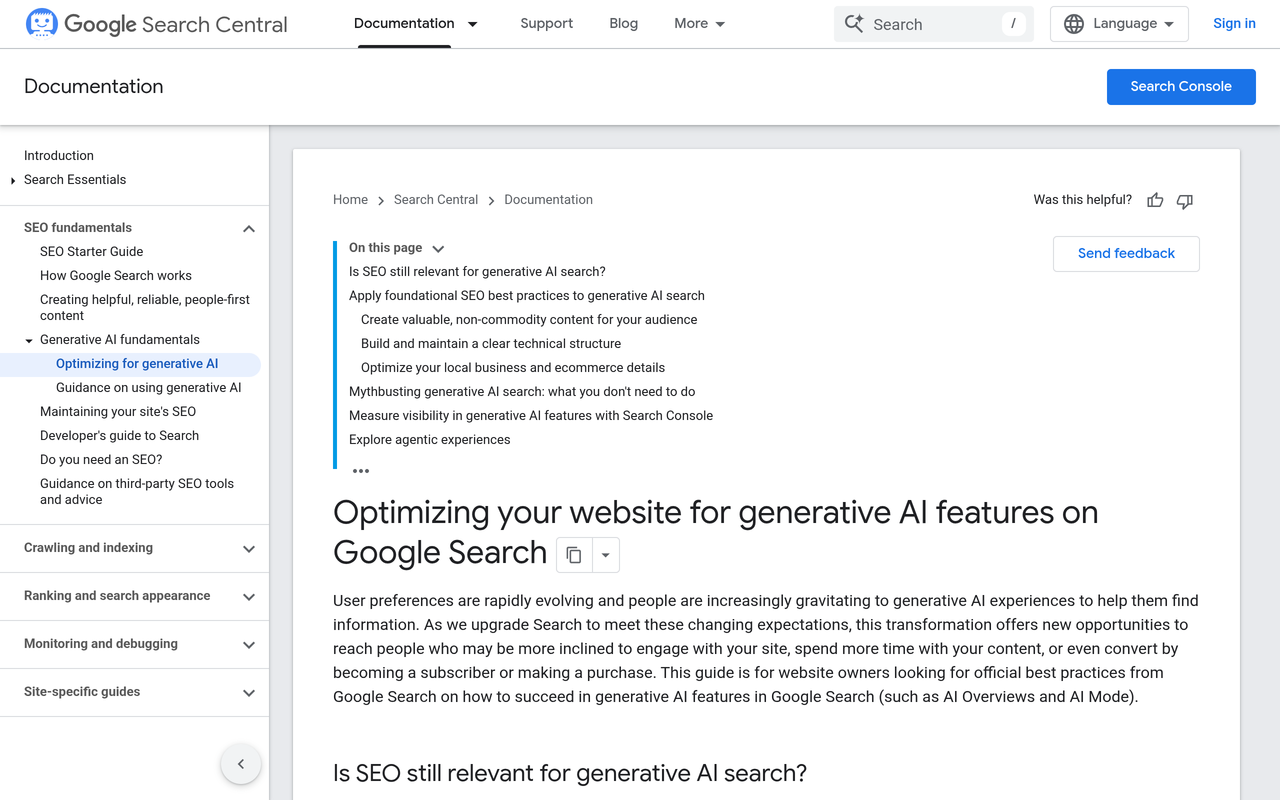
Google Search's own guidance draws the same line. Its AI optimisation guide, May 2026 calls "7 Tips for First-Time Homebuyers" commodity content, often based on common knowledge, and contrasts it with a first-hand piece on waiving a home inspection. It adds that a first-hand review gives a unique perspective, whereas a summary of existing content restates what is already available elsewhere.
Are top 10 listicles still worth publishing for AI search?
Yes, where the list is a real comparison and not a recycled tips post. Listicles remain one of the formats AI engines cite most, and the evidence on that is more mixed than the headlines suggest.
| Finding | Number | Source |
|---|---|---|
| Listicle share of all AI citations (75,000 answers, ChatGPT, Google AI Mode, Perplexity) | 21.9% | Search Engine Land reporting Wix Studio, March 2026 |
| Listicle share of commercial-intent citations | 40.9% | Same study |
| Professional services: third-party listicles against self-promotional lists | 80.9% against 19.1% | Same study |
| ChatGPT listicle citations, December 2025 to January 2026 | Down 30% (160K to 111K) | Seer Interactive, March 2026 |
| AI Overviews: self-promotional "best" listicles cited without the brand being recommended | 69% of cases | Search Engine Land reporting Lily Ray, June 2026 |
Read together, the numbers say three things. Commercial queries are where listicles do the most work. Third-party lists get cited far more often than a brand's own list in the Wix data. And ChatGPT was cutting listicle sources faster than other citation types, while Seer found AI Overviews moving the other way on the same prompts.
In Lily Ray's analysis of B2B software queries, 80 prompts triggered an AI Overview and self-promotional listicles were cited 323 times, roughly four citations per prompt. Being cited that often did not mean being recommended: the brand behind the list was left out of the recommendation in 69% of cases.
Seer Interactive found listicles were 16.6% of 2M ChatGPT citations, yet its 30% December to January drop shows the format is not a stable bet.
A quick calculation from Seer's published counts: 111K listicle citations out of 719K total in January is about 15.4%, against 160K of 931K, about 17.2%, in December. Share slipped, but the bigger loss was the total volume of citations per answer. Fewer citations per answer means each cited page matters more.
Which listicles does Google's advice put at risk?
Sort each "best X" or "top N" page by what it adds beyond common knowledge. Use this table to decide what to do with each one.
| Listicle type | Signal Google's guidance flags | Action |
|---|---|---|
| Generic tips ("10 things to consider") | Commodity content anyone could write | Retire, or merge into one page built on a first-hand case |
| Self-ranked "best tools" with you at number 1 and thin entries | Restates existing content, no evidence | Rewrite with dated tests and criteria, or expect rivals to be recommended |
| Comparison with your own test data, pricing checked on a date, named author | First-hand, non-commodity | Keep, refresh on a schedule |
| Category guide built on a method you published | Unique point of view | Keep, and add a table AI can quote |
How do I make a listicle that ChatGPT cites?
No one can promise a citation, and Google's advice is about its own Search. The practical move is to give an engine something it cannot get from the next page: specific, attributable evidence. Our guide on how AI engines choose citations covers the selection side. For the list itself, work through these steps.
- State the selection criteria first. Put three to five criteria above the list and score every entry against the same ones.
- Add one first-hand fact per entry. A measured result, a date you tested, a screenshot of your own setup, a failure you hit. If you cannot write one, drop the entry.
- Date every price and claim. "As checked on" a specific date, linked to the vendor's own page.
- Name the author and their role. Say who ran the test and what they know about the category.
- Put the answer in a table. A comparison table gives an engine a clean passage to quote. See brand fact blocks for LLMs for how to make facts quotable.
- Disclose your own position. If you rank your own product, say so and show why. The 69% figure above is the cost of a list that does not earn its own top slot.
- Check readability for machines. Run the page through the Content AI-Readiness Grader to see which passages are quotable and which are weak.
If your list is a competitor-alternatives page, the pattern in how competitor alternatives pages get cited applies: facts from each vendor's own page, dated and linked.
What first-hand evidence looks like in a listicle entry
Compare two versions of the same entry for a hypothetical project management tool list.
| Commodity entry | First-hand entry |
|---|---|
| "Great for teams. Offers boards, timelines and integrations." | "We moved a 12-person content team onto it for six weeks in October. Setup took two hours, and recurring tasks broke twice when we changed time zones. Price checked on 21 November 2026." |
The example is illustrative, not a real test. The point is structure: scope, duration, a specific problem, a date. You can only write the right-hand column if you did the work. That is Google's non-commodity test applied to one line.
What to check this week
- List every page whose title starts with "Top", "Best" or a number. Mark each as generic tips, self-ranked, or evidence-led.
- For the self-ranked ones, ask ChatGPT, Gemini and Perplexity the buyer question the page targets. Note whether your brand is named, and whether the page is cited.
- Check that crawlers can reach the page. The AI Crawler Checker shows whether GPTBot, OAI-SearchBot, ClaudeBot and PerplexityBot are blocked.
- Rewrite the three highest-traffic pages first, using the steps above.
Run the same prompts again after a few weeks. Answers shift between runs, so a single check proves little; AI citation stability explains why you need repeated runs.
How do I measure whether my listicles get cited?
Track two things separately: whether an engine cites your page, and whether it names your brand in the answer. Lily Ray's analysis shows they can diverge. For the difference, read citation versus brand mention, and for the aggregate view, how to measure AI share of voice.
Noma by Nurdd is an answer engine optimisation platform that asks 13 AI engines, including ChatGPT, Gemini, Perplexity and Claude, the questions your buyers ask, every day. It shows where your brand is named, where competitors are named instead, and which pages the answers draw on. That lets you see whether a listicle is cited, and whether the citation turns into a recommendation.
See it on your own brand: book a demo or start the 3-day free trial. A card is taken at signup so billing can start on day 3; cancel before then and nothing is charged. For a first look with no signup, the free brand audit asks ChatGPT, Perplexity and Gemini 10 buyer questions and shows whether your brand is named.
What does this change for AEO strategy?
It changes the unit of work from "a page per keyword" to "a page per thing you know first-hand". Google's own words point to measuring by leads or sales, not proxy scores. Kraham tells CMOs to plan around real business goals, and that is a useful check on any AI visibility dashboard, including ours: tie mentions to pipeline where you can. The AI search attribution guide covers how.
One limit applies. Google's guidance describes its own systems. ChatGPT, Perplexity and Claude choose sources by their own methods, and the Wix and Seer data show engines diverging. Treat first-hand evidence as the best-supported bet, not a guarantee.
How we researched this
We read Google's Think with Google article, Google Search Central's AI optimisation guide and Search Engine Journal's report on the 19 November 2026 post. We also reviewed published studies on listicle citations from Search Engine Land (reporting Wix Studio and Lily Ray) and Seer Interactive. Facts, figures and dates were checked on 2026-11-21. We ran no original tests for this article; the worked figures are calculated from published counts, and the hypothetical entry is labelled as an example.
What to do next
Audit your list pages this week, rewrite the self-ranked ones with first-hand evidence, then check whether engines cite and name you. To see that on your own brand, book a demo or start the free trial.
See what AI engines say about your brand
Free · no account · or start a 3-day trial
Questions people ask
Did Google tell brands to stop publishing listicles?
Not outright. Google's Think with Google account paired "Stop the 'Top 10' listicle" with leading on first-hand expertise. The linked article targets generic "Top 10 Things to Consider" posts, and neither it nor Google's Search guide mentions self-promotional "best" lists.
Are top 10 listicles still worth publishing for AI search?
Yes, if they are real comparisons with evidence. A Wix Studio study reported by Search Engine Land found listicles made up 21.9% of AI citations and 40.9% of commercial-intent citations. Generic tips lists are the weak case.
How do I make a listicle that ChatGPT cites?
State your criteria, add one first-hand fact per entry, date every price, name the author and put the comparison in a table. No tactic guarantees a citation, but these give an engine specific passages it cannot find elsewhere.
Why would AI cite my listicle but recommend a competitor?
Lily Ray's analysis of 80 B2B software prompts found Google AI Overviews cited self-promotional listicles 323 times yet left the brand out of the recommendation in 69% of cases. A cited page with thin, unevidenced entries can end up supporting better-known rivals.
What counts as first-hand evidence in a best-tools list?
Your own test with a date and duration, a measured result, a screenshot of your setup, a problem you hit, and a price checked on a stated date. Google's guide describes a first-hand review as one based on personal experience, unlike a summary of existing content.
How can I check whether my listicles are cited by AI engines?
Ask the buyer question each page targets across several engines, and note whether your page is cited and whether your brand is named. Repeat over weeks because answers change. Noma by Nurdd automates this daily across 13 AI engines, and its free brand audit gives a first check.